How to Plan a Surprise Proposal
Photoshoot in the Bay Area
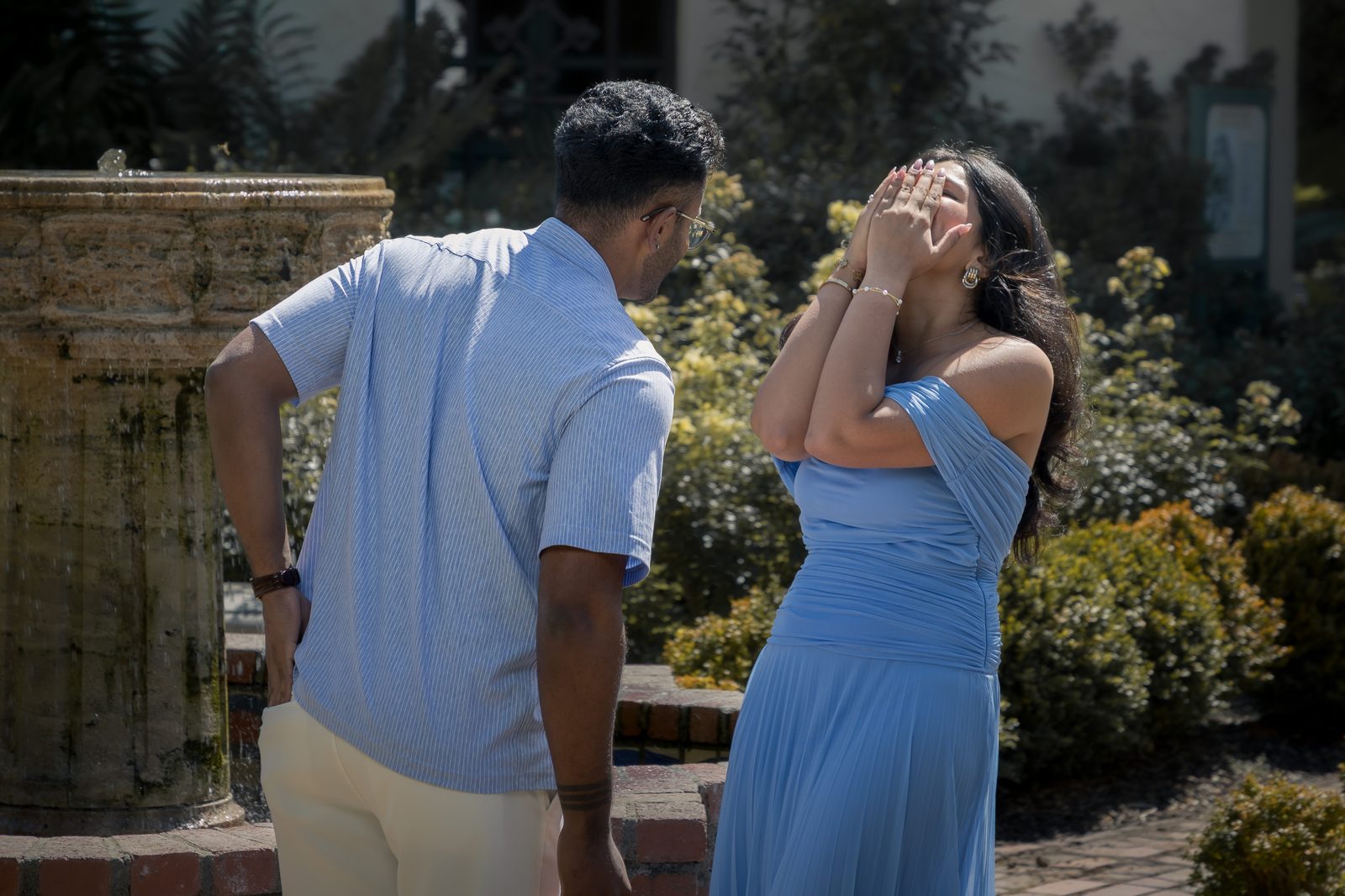
A surprise proposal with a hidden photographer is one of the most meaningful things you can organize for someone you love. It's also one of the most logistically involved. Here's how to do it well — from picking the right location to making sure the moment is actually captured.
Start with the location
The best proposal locations give the photographer somewhere to stand that's out of eyeline but close enough to capture real expressions. Open beaches and parks are great for this — Baker Beach, for example, allows the photographer to position behind rocks or further along the sand while still getting a clear line of sight. Garden venues like Allied Arts Guild in Palo Alto offer archways and plantings that are easy to stand behind. Avoid small indoor rooms or tight spots where it's impossible to be discreet.
The location should also mean something. A place you've been together, somewhere connected to a shared memory, or simply a spot that's beautiful to both of you. The photos will hold more weight if the setting carries meaning beyond just looking good.
How to coordinate without giving it away
The most important thing is having a believable reason to be there. Most proposals I photograph are set up as something else entirely — a "walk," a "sunset picnic," or in some cases a fake photoshoot (telling your partner you booked portraits together, when really the proposal happens during it). The fake photoshoot approach actually works exceptionally well because your partner is already expecting to be photographed, so the camera doesn't feel out of place.
Once you've settled on a location and cover story, share everything with your photographer: the route you're planning to walk, the exact spot where you'll propose, and what you'll say or do to signal that the moment is coming. The more detail, the better positioned I can be.
Timing: light matters most
Golden hour — the 60 to 90 minutes before sunset — is the most forgiving and flattering light for outdoor photography. If you can time the proposal to happen during this window, do it. The warm light makes everything look better, and if the moment runs long (which it often does), you'll still have beautiful light for the photos that follow.
If you're proposing in a garden or shaded location, midday light can work well too since the shade prevents harsh shadows. Avoid bright midday sun in open spaces — it's the hardest light to work with.
After the proposal
Plan for at least 30–45 minutes of photos after the moment itself. Once the surprise has settled and the initial emotion has passed, you'll want time for portraits together — some more relaxed, some more posed. This is also when family or friends can join if you've arranged a celebration immediately after. The best proposal shoots have both: the raw, unguarded reaction and the quieter portraits once you've had a moment to breathe.
One thing most people overlook
Make sure your partner looks the way they'd want to look in photos. You don't have to tell them why, but finding a reason for them to dress nicely — dinner afterward, a "special occasion walk" — means the photos won't catch them off guard in the wrong outfit. They'll thank you for it later.
I handle proposal shoots discreetly and have experience coordinating the logistics from start to finish. Reach out and let's talk through the plan.
Get in Touch